Monday, July 27, 2015

The Arnavutköy valley

The city of Istanbul grew from an ancient settlement. Recent archeological finds have shown that the oldest settlement is even older than previously thought. In November 2005, workers on the Bosphorus Tunnel Project discovered the silted-up remains of the Harbor of Theodosius which was one of the ports of Constantinople, the capital of the Byzantine Empire, located beneath the modern Yenikapı neighborhood of Istanbul. In addition, the excavations uncovered artifacts dating back to 6000 BC.

Living in one of the older neighborhoods of Istanbul is an adventure onto itself. Each day brings up something new to discover about the past.

I was born in Istanbul and later I went to university and lived in Istanbul for many years. Only in 2008 did I become an Arnavutköylü (meaning from or living in Arnavutköy as in Istanbulite, New Yorker, Parisian, etc.)


                                       The Arnavutköy valley viewed from the opposite shore of the Bosphorus

Arnavutköy is one of the historic neighborhoods of Istanbul, one of the villages on the Bosphorus and the name means Albanian village. Greek speaking Albenians were brought here in the second half of the 15th century by Sultan Mehmet II, the Conqueror. One source indicates that he brought them over to use as stone masons in his new capital. During centuries this was a major Greek village under different names. The last Greek name for the village was Mega Revma alluding to the strong current on the sea along the shore of the village. Gradually the name Arnavutköy caught on. As recent as 1912 the population comprised of close to 6000 Rum (Anatolian Greeks) and around 1500 others of different ethnic backgrounds.

One thing everybody knows is that the Arnavutköy valley was a very fertile piece of land. There were strawberry fields, vineyards, orchards, woods, gardens and farm land here from the top of the hill down to the sea. And, of course, there were fishermen. During my walks taking in the flora of this lovely place I still come across many different plants and trees.

At the last count I could name various pines, cypresses, elm, elaeagnus, can erik, acacia, poplar, walnut, peach, plane, fig, mulberry, persimmon, magnolia, chestnut, horse chestnut, orange, lemon, willow, oleander, ficus benjamina, nettle, loquat, linden and many others.

I choose linden to represent the rich biodiversity of this place for it is one of the species native to Turkey. Hot linden tea keeps one warm in the winter months and later in the year, for a few weeks the strong fragrance of the linden flowers fills the air with the promise of spring.

I am compelled to mention that while looking things up about the linden tree, some of the North American sites I visited mentioned the smell of the tree resembling the smell of semen. The smell was described as repugnant coming from a tree and the trees were described as messy. I shudder at the thought of it. Perhaps the American linden trees have this smell, I do not know. In Turkey the fragrance of the linden tree is nothing like that and the smell of linden flowers is considered pleasant.


Linden is the common name for some of the flowering trees of the genus Tilia in the family Malvaceae. Four of these are:
Tilia Americana, common name American linden. 
Tilia platyphyllos, common name Large leaved linden. 
Tilia cordata, common name Little leaf linden. 
Tilia tomentosa, common name Silver linden.

The Latin word tilia comes from a Proto-Indo-European word ‘ptel-ei̯ā’ with a meaning of ‘broad’, perhaps ‘broad-leaved’.


I don’t know the American linden. The three others are native to Europe.

Tilia platyphyllos is a deciduous tree, native to much of Europe. The specific epitheth platyphyllos means ‘with broad leaves’. T. platyphyllos tea can be used medicinally.

                              
                                                                      Linden buds and leaf in the spring

The leaves of all the Tilia species are heart-shaped and most are asymmetrical, and the tiny fruit, looking like peas, always hang attached to a ribbon-like, greenish-yellow bract, whose use seems to be to launch the ripened seed-clusters just a little beyond the parent tree (http://en.wikipedia.org/wiki/Tilia).

Tilia tomentosa is native to southeastern Europe and southwestern Asia, from Hungary and the Balkans east to western Turkey. It is widely grown as an ornamental tree in parks in Europe. Tomentosum refers to downy or hairy leaves. Most medicinal research has been done on Tilia cordata, although other species are also used medicinally and somewhat interchangeably.

             
                                                                      Linden tree in the fall

Tilia cordata is a species of Tilia native to much of Europe from England, through central Scandinavia, to central Russia, and south to central Spain, Italy, Greece, Bulgaria, Romania, Turkey, the Caucasus, and western Asia. In the countries of Central and Eastern Europe dried linden leaves and flowers are traditionally made into an herbal tea (tilleul) which is considered to be an anti-inflammatory herbal remedy for a range of respiratory problems: colds, fever, flu, sore throat, bronchitis, and cough. Linden tea is also considered good for aiding indigestion, vomiting, and palpitations. The leaf buds and young leaves are also edible raw.

Usually, the double-flowered species of linden are used to make perfume.

               
                                                              Scenes from Arnavutköy, 2014

 Linden

Monday, July 20, 2015

Citrus

I knew lemons and oranges and tangerines when I was growing up. They grew on similar looking trees and they developed from similar looking flowers that exuded a delicately sweet fragrance. They tasted good. I loved oranges and tangerines, and I enjoyed the sour taste of lemons.

For centuries oranges were a rarity. People who were lucky to have them would give them as treats to others, present them to the ill to remedy their sufferings and they would be grateful for the chance of tasting such succulent fruit. I ate oranges often as a child because they were grown in Aydın in the Aegean Region of Turkey where my family lived.


Lemon blossoms in May                                                        Orange blossoms in May

I did not really know that all citrus trees belong to the single genus Citrus in the family Rutaceae and they are interfertile which means they can interbreed. The number of natural species is unclear. All citrus species seem to be of hybrid origin. Natural and cultivated origin hybrids, including the most commercially sought citrus fruits of oranges, lemons, grapefruit, and some limes and tangerines, are believed to be derived from four ancestral species. Numerous hybrids, bud unions (graft budding) and cultivars have been produced and their taxonomy has become controversial, confusing and inconsistent. Different names have been given to varieties of the genus.

Oranges

The name orange applies primarily to the sweet orange, Citrus sinensis. The orange tree is an evergreen, flowering tree, with an average height of 9 to 10 m. Its alternately arranged oval leaves are 4 to 10 cm long and have crenulate (finely notched) margins. “Although the sweet orange presents different sizes and shapes varying from spherical to oblong, it generally has ten segments (carpels) inside, and contains up to six seeds (or pips) and a porous white tissue called pith or more properly, mesocarp or albedo lines its rind. When unripe, the fruit is green. The grainy irregular rind of the ripe fruit can range from bright orange to yellow-orange, but frequently retains green patches or, under warm climate conditions, remains entirely green. Like all other citrus fruits, the sweet orange is non-climacteric (non-climacteric fruits do not continue to ripen after harvest). The Citrus sinensis is subdivided into four classes with distinct characteristics: common oranges, blood or pigmented oranges, navel oranges, and acidless oranges (http://en.wikipedia.org/wiki/Orange_(fruit)”.

I never thought that this fruit of temperate climes could not be native to the Mediterranean region. The orange is unknown in the wild state. It is assumed to have originated in southern China, northeastern India, and perhaps southeastern Asia. Oranges have been grown for thousands of years and since the end of the1980s orange trees have been found to be the most cultivated fruit trees in the world.

I was not aware that ripe fruit and flowers can be found on the same tree.


We ate Jaffa oranges, which take their name from the city of Jaffa and navel oranges mostly. Navel oranges are called Washington in Turkey which may be due to the fact that they were first brought to Turkey to be planted in the year 1945 from the USA, albeit from California (these oranges were brought to Washington DC for the first time in 1870 and they were labeled ‘Washington’). Navel oranges are a favorite. A second fruit grows at the apex, the growing tip of these oranges, and it resembles the human navel.

Harvest times vary for oranges. Harvesting may start as early as end of October and continue until mid-winter to early spring. Navel oranges are gathered from November until January. They are available until spring.


                                                                     An orange tree at Heybeliada in Istanbul in the spring of 2014.

The word orange derives from the Sanskrit (in the Indo-Aryan language family) word for ‘orange tree’ (नारङ्ग nāraṅga), probably a loan word of Dravidian (a language family of about 70 languages) origin. The Sanskrit word reached European languages through Persian نارنگ (nārang) and its Arabic derivative نارنج (nāranj).

In Europe, citrus fruits were introduced to Italy by the crusaders in the 11th century. The sweet orange, however, was not known until the late 15th century or the beginnings of the 16th century until Italian and Portuguese merchants brought orange trees into the Mediterranean region. “As Portuguese merchants were presumably the first to introduce the sweet orange in Europe, in several modern Indo-European languages the fruit has been named after them. Some examples are Albanian portokall, Bulgarian портокал (portokal), Greek πορτοκάλι (portokali), Persian پرتقال (porteghal) and Romanian portocală’’. (http://en.wikipedia.org/wiki/Orange_(fruit).

In Turkish the word for citrus is ‘narenciye’ and the word for orange is ‘portakal’.

The word orange entered Middle English from Old French and Anglo-Norman orenge. The earliest recorded use of the word in English is from the 13th century. The earliest use of the word in reference to the color is thought to be from the 16th century.

Spanish explorers introduced the sweet orange into the American continent. In Louisiana, oranges probably were introduced by French explorers.

Lemons

Here is another thing I was surprised to find out: The origin of the lemon is unknown, though it is thought that lemons first grew in Assam, a region in Northeast India. Assam is one of the richest biodiversity zones in the world. A study of the genetic origin of the lemon reported that it is a hybrid between sour orange and citron. I used to think that citron was just the French word for lemon. Citron is a citrus fruit botanically classified as Citrus medica.

The origin of the word lemon may be Middle Eastern from the Arabic laymūn or līmūn ليمون, and from the Persian līmūn لیمو, a generic term for citrus fruit, which could be a cognate of Sanskrit निम्ब (nimbū, ‘lime’).


                                                                                                  Lemon tree

Eureka kind lemons are the common supermarket lemons that produce fruit year round. Turkey is the main grower of lemons and tangerines in the Mediterranean region.

Tangerines

I did not know that tangerines are a type of orange. I also learned that while all tangerines are mandarins, not all mandarins are tangerines. I should have known better for in Turkish all tangerines are called ‘mandalina’ from the word mandarin I presume.


                                                                                                    Tangerine tree

These small and tasty oranges were first brought to England from China in 1805. The robes worn by public officials or mandarins in the Chinese empire of that time were deep orange and the form of Chinese spoken by public officials and other educated people in China was Mandarin. The oranges were dubbed a mandarin.

Tangerines are a specific type of citrus fruit within the mandarin grouping. In some areas of the world the mandarin grouping may be referred to as the tangerine grouping. The mandarin group of citrus fruits includes the cultivars clementines, satsumas, honey oranges and other citrus fruit in addition to tangerines. The botanical name for mandarins is C. reticulate. The tree is native to Southeast Asia. The fact that the first mandarins were shipped to Europe from the city of Tangiers in Morocco in 1841 gave rise to the name tangerine.

Fruits in the mandarin grouping have a distinctive thick rind that makes them easy to peel, especially if a person starts around the flower or stem end of the fruit. Here is another interesting fact that I learned: Citrus fruits are usually self-fertile (needing only a bee to move pollen within the same flower) or parthenocarpic (not needing pollination and therefore seedless, such as the satsuma)-(http://en.wikipedia.org/wiki/Mandarin_orange).

There is so much information about citrus fruits. I believe it will be best for me to simply consume the fruits.


                                                                                                   Mandarins

Monday, July 13, 2015

Cockscomb


                                                   http://commons.wikimedia.org/wiki/File:Red_Cockscomb_flowers.JPG

There was a flower bed in the gardens of my father’s workplace, the Aydın State Hospital (Turkey) where he was one of the doctors and later the head doctor. That flower bed provided me with memories of lovely plants I encountered for the first time and sometimes the only time. Celosia cristata (celosia is derived from kelos which means burned in Greek) which is commonly known as cockscomb, was one of the flowers I remember seeing when I was maybe five years old or even younger. Since then I never came across this flower until recently.

The unusual structure and the velvety touch of this red flower had attracted me very much. Celosia cristata is an edible flower in the family Amaranthaceae. It is thought to be of African origin. They are grown as ornamental plants as well as vegetables in India, Western Africa and South America.

C. cristata is an annual plant of tropical origin and it is herbaceous meaning it lacks a woody stem. As an annual plant it grows for only about one fourth of a year. It grows up to 1 foot in height, though many are smaller. The leaves are either green or bronze/maroon, depending upon the cultivar. C. cristata are usually brightly colored, usually red, yellow, pink, or orange I’m learning. A variety of colors may be present in hybrids. This plant can grow well in both humid and arid conditions, and the flowers can last for up to 8 weeks.

The plant thrives in areas with tropical climate. However, it can also be grown in summer months in a colder climate. The plants are relatively easy to grow and care for due to the fact that they have few insects that feed on them. Mites though are known to feed on these plants.

The plants are hardy and can be grown easily from the seeds. They are resistant to most diseases but they are also susceptible to leaf spotting, root rot and root strangulation. The former two can be prevented by avoiding a damp soil and the latter by frequent weeding. Also wetting the leaf and flowers should be avoided as they can lead to fungal diseases. (http://en.wikipedia.org/wiki/Celosia_cristata)

Though the perfect place for them is one with no shade and a well-drained soil, they grow equally well indoors or out. Perhaps I should try growing cockscomb indoors sometime.


The round and very shiny seeds are twice the size of poppy seeds.
 

Tuesday, July 7, 2015

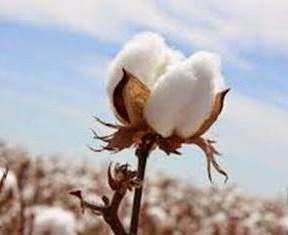
Cotton


                                      A cotton field in the Aegean Region of Turkey. Photograph: Birsen Odyakmaz

Cotton belongs in the genus Gossypium of the Malvaceae family. Members of this family of flowering plants include the well-known cacao, okra, hollyhocks and hibiscus. Cotton produces delicate flowers and at the latest stage of growth, the soft, fluffy cellulose fiber of the plant forms around the seeds in a rounded pod called boll to help carry the seeds on the wind and distribute the plant.  I remember seeing beautiful fields of cotton in Aydın, Turkey like the one in the picture above on our weekend drives during the '50s and early 60's.


The plant is a shrub native to tropical and subtropical regions around the world. I’m learning that the greatest diversity of wild cotton species is found in Mexico.

Cotton was independently domesticated in the Old and New Worlds. Searches in caves in Mexico brought out bits of cotton bolls and pieces of cotton cloth nearly 7000 years old. In the Indus River Valley in Pakistan, cotton was being grown, spun and woven into cloth around the same time. Cotton threads preserved in copper beads were recovered at archeological sites. Egyptians knew about cotton also.

Until Alexander the Great set foot on Asia Minor in 334 BC and expanded his empire to the borders of India, the Greeks, the Levant and the Arabs did not know cotton. Later, Arab merchants brought cotton cloth to Europe in the late medieval period. By 1500, cotton was cultivated in warmer regions throughout the whole world. The fiber was first spun by machinery in England in 1730. With the advent of the Industrial Revolution (the era of transition to new manufacturing processes in the period from about 1760 to sometime between 1820 and 1840) in England and the invention of the cotton gin in the U.S. (1793) which was used to remove the seeds after harvest, cotton started to be used widely.

When cotton fiber was first brought to Europe, people did not know how it was derived other than that perhaps ‘the wool’ grew on trees in the wild in India. The German name for cotton is ‘Baumwolle’ meaning tree wool. The English name derives from the Arabic (al) 'quṭn' (قُطْن), which began to be used circa 1400 AD (http://en.wikipedia.org/wiki/Cotton). The Turkish name 'pamuk' is believed to come from the ancient city of Hieropolis Bambyce or Bambyke near the modern day town of Manbij in Syria. Bambyce became 'bambuk' or 'pambuk' and finally 'pamuk'.

Cotton has been a very important commodity throughout history. In modern times Great Britain has been the shaper of the cotton industry in several areas of the world. The Lancashire region of Great Britain emerged as the global center of the cotton trade during the Industrial Revolution. At first, raw cotton fibers were purchased from colonial plantations, processed into cotton cloth in the mills of Lancashire, and then exported on British ships to colonial markets in West Africa, India, and China (via Shanghai and Hong Kong).

Although India was one of the countries where cotton was first domesticated, by the 1840s it was no longer capable of supplying the vast quantities of cotton fibers needed by mechanized British factories. Also, shipping bulky, low-price cotton from India to Britain was time-consuming and expensive. British traders were being encouraged to purchase cotton from plantations in the United States and the Caribbean.

American cotton was being recognized as a superior type (due to the longer, stronger fibers of the two domesticated native American species, Gossypium hirsutum and Gossypium barbadense). In 1800, American cotton displaced that of the West Indies, and in 1821 India was also surpassed by the productivity of the American cotton industry. It did not take long for the American cotton industry to expand to dominate the world market sometime between 1790 and 1820. By the mid-19th century cotton had become the backbone of the southern American economy with the extensive use of slave labor. The USA became Great Britain’s single largest source of cotton. Nearly three quarters of cotton imports between 1815 and 1859 into Great Britain came from the USA.

However, during the American Civil War from 1861 to 1865, American cotton exports slumped due to a Union blockade on Southern ports, and also because of a strategic decision by the Confederate government to cut exports, hoping to force Britain to recognize the Confederacy or enter the war. The Southern slave states declared their secession and formed the Confederate States of America (the 'Confederacy' or the 'South'). The states that remained in the Union were known as the 'Union' or the 'North'.

During this time, the British Empire once again turned to cotton cultivation in other areas of the world to fulfill its raw cotton needs. India, Egypt and Turkey emerged as alternative sources for cotton.

India greatly increased its growth of cotton to replace the lost production of the American South. Through tariffs and other restrictions, the British government discouraged the production of cotton cloth in India; rather, the raw fiber was sent to England for processing and India had to purchase manufactured cloth from Britain.

Although Egypt was still a part of the Ottoman Empire, England began to import cotton from Egypt as early as 1822. Cotton ginning factories began to be built. The Alexandria-Cairo railway was completed to transport cotton to market centers. With these improvements, Egypt became a major cotton producer, and a very important trading partner with Great Britain. The cotton trade between Great Britain and Egypt eventually expanded British influence over the country, at the expense of the French.

Yet, after the American Civil War ended in 1865, British and French traders abandoned Egyptian cotton and returned to cheap American exports, sending Egypt into a deficit spiral that led to the country declaring bankruptcy in 1876.

A small amount of cotton was grown in Turkey before the US Civil War. As the war progressed and the cotton supply for British factories dwindled British companies started diverting their attention to Turkey, still the Ottoman Empire back then, as one of the countries that could grow the cotton needed by the cotton industry of Britain.

As early as 1856 companies such as Asia Minor Cotton were founded, in the beginning with Ottoman intermediaries. Later on British companies began to buy land from Anatolia themselves and started major cotton fields. Indian cotton seeds were being used and the cotton fiber that was being produced was a shorter and courser kind. When the American Civil War came to an end Britain went back to importing the US cotton which had longer fibers fit to be used at Lancashire cotton mills. It was fortunate for the Ottomans Empire that Spain had mastered the production of courser cotton fabrics and was ready to buy cotton grown in Anatolia.

The first railroad built in Anatolia during the Ottoman Empire was the railroad connecting Izmir to Aydin in the Aegean region. The incentive to start the enterprise was to carry cotton and other goods to the port of Izmir. Thus, railroad history in Anatolia started on September 23, 1865 when a British company started work on this first railroad. The 133 km. stretch of the railroad was completed by Sultan Abdulaziz ten years later in 1866. The services were run by the British Oriental Railway Company until it was taken over in 1935 by the Turkish TCDD (Turkish Republic State Railroads).

After 1866 the railroads kept on being expanded in Anatolia. Cotton planting in the Çukurova region in southern Anatolia started in 1880 when Adana and Mersin were connected by railroad.

                                                                        Aydın train station c. 1931.

                                                                The train tracks passed through the city via an underpass.

Cotton remained a key crop in the Southern United States economy after the end of the US Civil War in 1865. Today, cotton is a major export of the US, and a majority of the world's annual cotton crop is of the long-staple American variety. The top cotton growing countries are China, India, USA, Pakistan, Brazil, Uzbekistan, Turkey and Australia. Cultivars of the cotton plant are grown in these and other countries.

Cotton is one of the most used natural fibers today. Consumers from all classes and nations wear cotton and use it in a variety of applications. Thousands of acres globally are devoted to its production, whether it be new world cotton, with longer, smoother fibers, or the shorter and coarser old world varieties.

There are four commercially grown species of cotton, all domesticated in antiquity. Gossypium hirsutum, also known as upland cotton or Mexican cotton, is the most widely planted species of cotton in the United States, constituting some 95% of all cotton production there. It is native to Central America, southern Florida and Mexico. Worldwide, 90% of all cotton production is of cultivars derived from this species.

Gossypium hirsutum includes a number of varieties or cross-bred cultivars with varying fiber lengths and tolerances to a number of growing conditions. Besides being fibre crops, Gossypium hirsutum and Gossypium herbaceum are the main species used to produce cottonseed oil.

Growing the fiber and producing cotton products do not come easy. Many farmers in developing countries receive a low price for their produce, or find it difficult to compete with developed countries.

There is also controversy associated with growing cotton particularly in the developing world, where dangerous pesticides are heavily employed. Many growers heavily douse the plant in pesticides that are harmful to human and animal health, as well as herbicides to eliminate plant competition for resources.

A number of producers also genetically modify the plant, which many outside the industry view as a questionable practice.

Cotton also has very large water requirements, which may place stress on nations with limited water resources.

In the late 20th century, there was a push for organic, sustainable cotton grown and harvested without the use of pesticides and human exploitation. It is significantly more expensive than conventionally farmed varieties, however, and may not be practical for most consumers.

The world pays a high price for the wide use of this wonderous plant.

Monday, June 29, 2015

Oleander


Commonly known simply as oleander, Nerium oleander is an evergreen shrub or small tree in the Apocynaceae family. The only species classified in the genus Nerium, it is thought to be native to the Mediterranean region. It is naturalized to a broad area from Mauritania, Morocco and Portugal eastward to the Arabian Peninsula and can be found in southern Asia, China and in the United States.

I had not noticed this plant until we started taking long car trips from Istanbul to Kuşadası in the 1970s. In the beginning of the summer, each time we passed near Manisa we used to see oleander bushes along the road and they would be harbingers of our destination being not too far from there on. N. oleander typically grows in dry stream beds.

N. oleander did not used to be cultivated as widely as it is today. Oleander increasingly became to be grown as an ornamental plant in landscapes and in parks and it became a desirable garden plant. It is being used as a median strip planting for highways. It can easily be grown into trees. “The plant will tolerate a wide range of conditions, including difficult soil, salt spray, high pH, severe pruning, reflected heat from pavements and walls, and drought”. It can withstand winter temperatures down to -10 degrees Centigrade.
(http://www.gardeningknowhow.com/ornamental/shrubs/oleander/oleander-growing-tips.htm)

Oleander grows to 2–6 m tall, with erect stems that splay outward as they mature. The leaves are in pairs or whorls of three, thick and leathery, dark-green, narrow lancoelate, 5–21 cm long and 1–3.5 cm broad. The flowers grow in clusters at the end of each branch; they are white, pink to red, 2.5–5 cm diameter. They are often, but not always, sweet-scented. The fruit is a long narrow capsule 5–23 cm long, which splits open at maturity to release numerous downy seeds. (http://en.wikipedia.org/wiki/Nerium)

                                    Seed capsules

This is one of the most poisonous of commonly grown garden plants, however, there are few reported poising incidences of humans. All parts of the plant are generally considered toxic and the level of poisoning varies with the particular plant, part of the plant, and the amount consumed.

In Turkish the name of the plant is ‘zakkum’ from the Arabic (زقوم) word for it. According to Islam this is the tree with the deadly and bitter fruit that grows in hell. The tree found in paradise is ‘tuba’. It is fortunate that when the word is used to mean bitter or poisonous foodstuff it is pronounced as ‘zıkkım’ which is probably closer to the Arabic way of saying it and this means, in daily life people do not associate the pretty plant with any negative connotations. ‘Zıkkımın kökünü ye’- ‘eat the root of oleander’ is an expression uttered at times of annoyance when someone close does not like or eat what you have prepared for them. Not a nice thing to say.


          Bodrum, Turkey 2006                                                                                                       Cannes, France 1996

Oleanders bloom from May to October. Over 400 cultivars have been named and many of them have double flowers. I believe shades of apricot, salmon, purple and yellow have also been created.


Monday, June 22, 2015

Six floral kingdoms

I wanted to know about the general classification of plants and here is what I found out: In the field of geography the areas of the world are classified in different ways. One of these ways is to look at the distinctive flora of the different areas of the world, the word flora defining the plant life occurring in a particular region or time, generally the naturally occurring or native plant life. Botanist Ronald D'Oyley Good (1896-1992), a professor of botany at the Hull University, Yorkshire, England, identified 6 floral kingdoms. Building on the work of Prof. Good, Soviet-Armenian botanist Armen Takhtajan (1910-2009), an important figure in 20th century plant evolution, systematics and biogeography, created a system of classification of the following six floral kingdoms:
• Holarctic Kingdom
• Paleotropical Kingdom
• Neotropical Kingdom
• South African Kingdom
• Australian Kingdom
• Antarctic Kingdom
The six floral kingdoms contain a total of 35 regions, with each kingdom having at least one region, and all regions having at least one province, for a total of 152 provinces.

Antarctica

The continent of Antarctica has been too cold and dry to support virtually any vascular plants for millions of years. The cold, lack of sunlight, little rainfall, inferior soil quality and lack of moisture account for scanty vegetation. Plants are not able to absorb water available in the form of ice. Presently the flora of Antarctica consists of some lichens, mosses, liverworts, and numerous terrestrial and aquatic algal species.

“Only two species of flowering plants, Antarctic hair grass (Deschampsia antarctica) and Antarctic pearlwort (Colobanthus quitensis) are found, occurring on the South Orkney Islands, the South Shetland Islands and along the Western Antarctic Peninsula.” (http://www.antarctica.ac.uk/about_antarctica/wildlife/plants/)

Lichens

Lichens have proliferated in Antarctica because they have a high tolerance of draught and cold. A lichen is a composite organism consisting of a fungus and a photosynthetic partner, growing together in a symbiotic relationship with the photosynthetic partner converting light energy (from the sun) into chemical energy which is later used to fuel the organism’s activities.

I do not think the lichens that live in Antarctica are to be found near any place I live or travel. The lichen the lay person is most familiar with must be the common orange lichen which has wide distribution. It is found in Australia, Africa, Asia, North America and throughout much of Europe. The species was first described by Carl Linnaeus in 1753, as Lichen parietinus. Now labelled Xanthoria parietina, it is a lichen species in the family Telochistaceae. It can be found near the shore on rocks or walls, and also on inland rocks, walls, or tree bark. (the epithet parietina means "on walls").


The upper surface is some shade of yellow, orange, or greenish yellow, while the lower surface is white.


X. parietina is a very pollution-tolerant species. It is also tolerant of heavy metal contamination.


It was chosen as a model organism for genomic sequencing (planned in 2006) by the US Department of Energy Joint Genome Institute (JGI). (http://en.wikipedia.org/wiki/Xanthoria_parietina)

My photographs do not do justice to this versatile plant which is hidden from sight most of the time for the lay person. Also, I realize that I would need botanical and chemical expertise to begin to describe the complex structure of lichens in any adequate manner.


Monday, June 15, 2015

Euphorbia helioscopia

I saw this familiar plant in October in the garden of my mother’s apartment complex in Istanbul. The gardener had allowed the weeds to take over the flower beds at a time when winter was around the corner. With delight I photographed it and discovered some lovely details about it. I had no hope of finding out its name any time soon which meant that I would not be able to write about it.


Back in Montreal in April (2014), getting ready to fly back to Istanbul once again, I received the promotional spring copy of the Plaisir de Vivre magazine in the mail. There was an article titled Le Vert Galant/Seed Savior about the Quebec artist Patrice Fortier who grows vegetables in his garden in Kamouraska by the St. Laurent River. Fortier had taken the picture of the top of a sun spurge protruding through the leaves of another plant in his garden.

A plant native to Europe, northern Africa and most of Asia was found in Quebec. The binomial name for it is Euphorbia helioscopia. To unfamiliar eyes it may seem like a very nondescript weed. When you look closely, like all plants, it is a marvel of nature. E. helioscopia belongs to the genus Euphorbia of the family Euphorbiaceae, and characteristically has milky juice and small flowers with no petals or sepals. The three compartment seed pods protrude from the side of the flowers and they out grow them in size.


E. helioscopia is an annual plant that grows in arable or disturbed land. It grows to 10–50 cm tall, with a single, erect, hairless stem, branching toward the top. The leaves are oval, broadest near the tip, 1.5–3 cm long. The flowers are small, yellow-green and flowering lasts from mid spring to early fall.


The botanical name Euphorbia derives from Euphorbus, the Greek physician of King Juba II of Numidia, a Berber-Libyan kingdom in North Africa. He wrote that one of the cactus-like Euphorbias was a powerful laxative. In 12 B.C. Juba named this plant after his physician Euphorbus. Botanist and taxonomist Carl Linnaeus assigned the name Euphorbia to the entire genus in the physician's honor (http://en.wikipedia.org/wiki/Euphorbia).

The name helioscopia comes from the Ancient Greek helios, ’sun’ and skopein, ’to watch’: sunwatcher. When the plant is observed, it can be seen that it turns its stems towards the sun.

The members of the family and genus are commonly referred to as spurges. The word derives from the Middle English/Old French espurge, ‘to purge’, based on the use of the plant's sap as a purgative.

                                                               Sun spurge in April 2014

The milky sap of spurges called ‘latex’ evolved as a deterrent to herbivores. In contact with the mucous membranes of the eyes, nose and mouth, the latex can produce a painful inflammation.

I found out recently that Mexican jumping beans are the seed pods of the shrub Sebastiania pavoniana. The 'beans' are inhabited by the larva of a small moth, Cydia deshaisiana. The ‘bean’, usually tan to brown in color, ‘jumps’ when heated, because the larva spasms in an attempt to roll the seed to a cooler environment to avoid dehydration and consequent death. However, they are not related to actual beans, but rather to spurges (http://en.wikipedia.org/wiki/Mexican_jumping_bean).

On a road trip through New Mexico and Arizona in the summer of 1997 I had a jumping bean. I inadvertently left my jumping bean in the sun and it stopped jumping.