Monday, October 3, 2016

Quince

Ayvayı yedim!

‘Ayvayı yemek’, literally ‘to eat the quince-ayva’ in Turkish, is a sarcastic slang term used to indicate any troublesome situation or malevolent incident that may have already occurred or to be avoided in the future. This usage refers to the rather dry and sour aftertaste the quince may leave in the mouth.

I’m expressing that ‘I’ve already eaten the quince’, that is, I’m intimidated by the task of talking about the quince which I find intriguing like all the other wonderful fruits nature offers us.


To enjoy eating raw quince, one has to have acquired the taste and also, be able to discern the good tasting quince from the unpleasant tasting one so as not to experience what the expression ‘I ate the quince’ implies. The quinces are too astringent before they are sufficiently bletted.

High in pectin (a polysaccharide made of multiple chains of sugars that make up carbohydrates), in many countries around the world the quince is eaten cooked. They are peeled and roasted, baked or stewed. Quinces are also used to make jam, jelly and quince pudding. The term marmalade, originally meaning quince jam, derives from ‘marmelo’, the Portuguese word for the quince. Quince marmalade is one of my favorite fruit preserves.

Here is a recipe for the delicious desert called the ‘quince sweet’ from Turkey.

Ingredients: 3 quinces, ½ cup or a little less sugar, a stick of cinnamon, ½ cup or a little more water to cook in and a large bowl of water to immerse the uncooked quince during preparation, juice of half lemon.
Directions: To prevent the quinces from browning during preparation, add plenty of water and the lemon juice into a deep bowl. Halve the quinces and hallow out the middle parts with the pits and place the halves in the bowl of lemon water as you go along. Save the pits to be used during cooking to give the quince an attractive red color.

When all the halves are peeled, arrange them in a wide pan with the smooth sides facing up. Add the cinnamon stick and the pits into the pan. Pour in the ½ c water. Distribute the sugar evenly on each piece of quince. Cover the pan and bring the water to a boil. Lower the heat and cook for 1-1.5 hours until the quinces soften and change color. Do not open the lid until the cooking is done. Let the quinces cool for 3-4 hours before serving.

Kaymak-a creamy dairy product, and grated pistachio nuts go well with the quince sweet. Walnuts or hazelnuts are favored also.
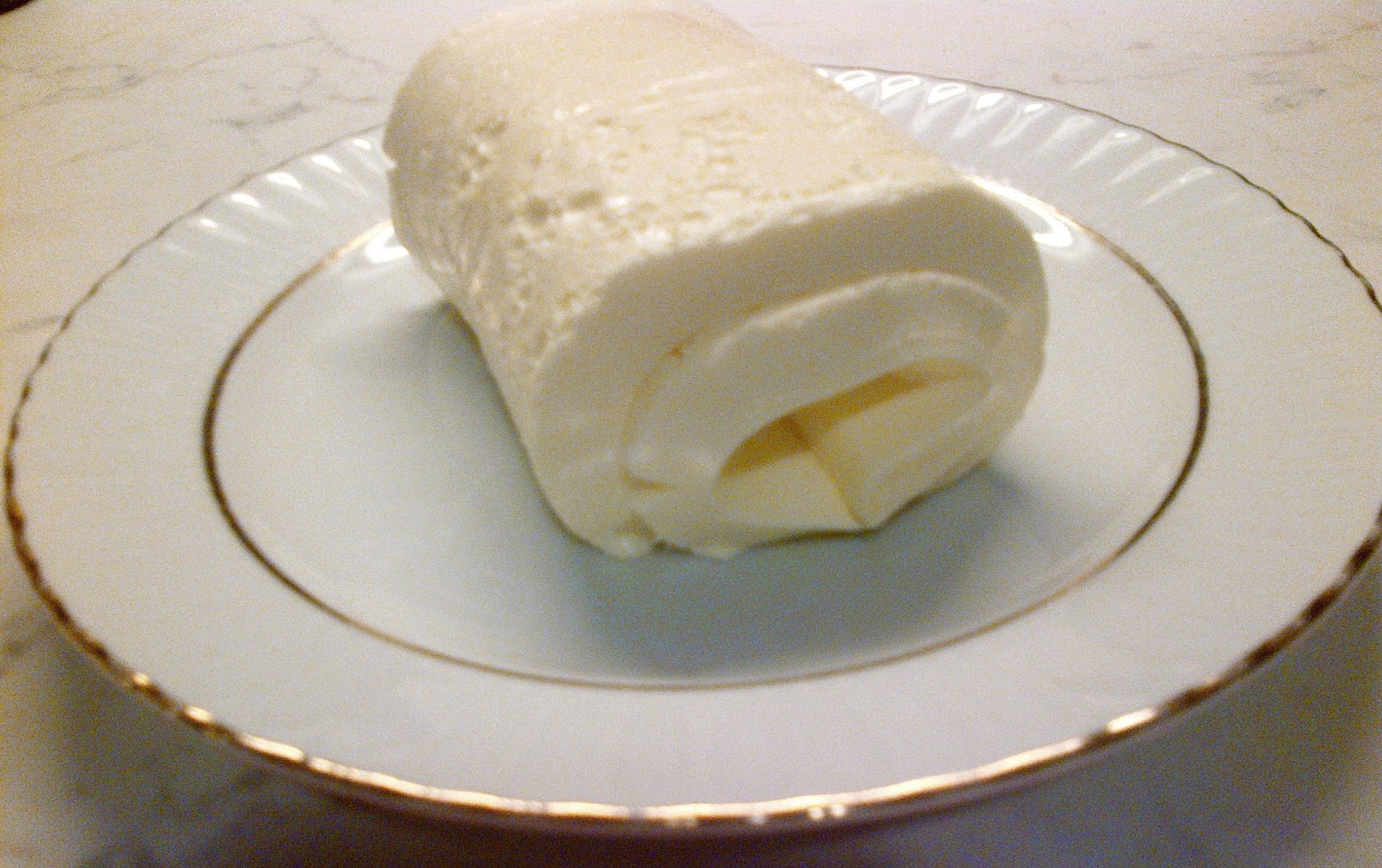
https://en.wikipedia.org/wiki/Kaymak Author:E4024

Kaymak: “Kaymak is customarily made in Central Asia, some Balkan countries, Turkic regions, Turkey, Iran and Iraq. The traditional method of making kaymak is to boil the milk slowly, then simmer it for two hours over a very low heat. After the heat source is turned off, the cream is skimmed and left to chill (and mildly ferment) for several hours or days. Kaymak has a high percentage of milk fat, and it has a thick, creamy consistency.

The word kaymak has Central Asian Turkic origins. Shops in Turkey have been devoted to kaymak production and consumption for centuries. Kaymak is mainly consumed today for breakfast along with the traditional Turkish breakfast. It is traditionally eaten with baklava and other Turkish desserts, fruit preserves and honey.” (https://en.wikipedia.org/wiki/Kaymak)

Back to our fruit; the quince is native to rocky slopes and woodlands in South West Asia, Turkey and Iran, yet it can be grown successfully at latitudes as far north as Scotland. Turkey is the top producer followed by China.

The quince-Cydonia oblonga is the sole member of the genus Cydonia in the family Rosaceae (which also contains apples and pears, among other fruits). The quince tree is a small deciduous tree that bears what is called a ‘pome fruit’ in botany, after the Latin word for ‘fruit-pōmum’. Pome fruits have a core of several small seeds, surrounded by a tough membrane. Apples, pears, loquat, medlar are also examples of pome fruits, grown from spring blossom and harvested from late summer through to late autumn.

The immature fruit is green with dense grey-white pubescence, most of which rubs off before maturity in late autumn when the fruit changes color to yellow and acquires a hard and perfumed flesh.


The quince is bright golden-yellow when mature and 7 to 12 centimeters long and 6 to 9 centimeters across. It is similar in appearance to an apple (Cydonia oblonga v. maliformis) or to a pear (Cydonia oblonga v. piriformis). Most quinces grown in Turkey are of the second kind (with names like Limon, Demir, Ekmek or Bardak).


The quince tree is also grown for its attractive blossoms and other ornamental qualities. The tree grows 5 to 8 meters high and 4 to 6 meters wide.


The flowers, produced in spring after the leaves, are white or pale pink, 5 cm across, with five petals. The leaves are alternately arranged, simple, 6–11 cm long, with an entire margin and densely pubescent with fine white hairs.

Here are some interesting facts Wikipedia gives us about the quince:

The quince requires a cold period which is called vernalization* (below 7 °C) to flower properly. The tree is self-fertile; however, its yield can benefit from cross-fertilization. The fruit can be left on the tree to ripen further, which softens the fruit to the point where it can be eaten raw, but if that is the case they should be picked before the first frosts.

Among the many cultivars grown in Turkey, ‘Smyrna’ was first recognized in 1887. It stores longer than other varieties.

Cultivation of the quince may have preceded the apple culture. Among the ancient Greeks, the quince was a ritual offering at weddings, for it had come from the Levant with Aphrodite and remained sacred to her. It was with a quince that Paris awarded Aphrodite.

Plenty more is told about the past of this fabled fruit.


_____________

* Vernalization (from the Latin ‘vernus’-of the spring) is the acquisition of a plant's ability to flower in the spring by exposure to the prolonged cold of winter.


Thursday, September 1, 2016

Hazelnut

I remember getting fresh hazelnuts in the summer months and eating them right out of the paper bag the street vendor or the green grocer provided. Thus, I decided to be on the lookout for them this summer and finally, towards the end of July, I found a green grocer displaying some in front of his store in our neighborhood in Istanbul.


You can bite into fresh hazelnuts and easily break their shells with your teeth. They are oh so sweet, moist and meaty.


Now, after having rejoiced about my memories of eating fresh hazelnuts, I need to take a pause here so that I can explain my misconception about them; these are in fact a poorer quality of hazelnuts not worthy of commercial exploit which are therefore consumed only as appetizers while they are fresh. I am aghast!  I only found out about this distinction while writing this post and there will be more about it further down.

Ordinarily, hazelnuts ripen in August. They are harvested by shaking the nuts off the branches and gathering them from the ground by hand, or picking them directly off the tree.

Fresh hazelnuts are sometimes sold in their green sheaths or involucre. Often the vendors un-sheath the nuts before presenting them to the customers.


The shape and structure of the involucre, and also whether the plant grows into a tree or a shrub are important in the identification of the different species of hazel.

The first three of the following examples of hazelnuts categorized according to their involucre, grow in Turkey:
• Nut surrounded by a soft, leafy involucre, multiple-stemmed, suckering shrubs to 12 m tall.
         Involucre short, about the same length as the nut
            -Corylus avellana: Common hazel, Europe and western Asia.
         Involucre long, twice the length of the nut or more, forming a 'beak'
            -Corylus maxima: Filbert, southeastern Europe and southwest Asia
• Nut surrounded by a stiff, spiny involucre, single-stemmed trees to 20–35 m tall.
         Involucre moderately spiny and also with glandular hairs
            -Corylus colurna: Turkish hazel, southeastern Europe and Asia Minor
         Involucre densely spiny, resembling a chestnut burr
            -Corylus ferox: Himalayan hazel


Also, when we look into the characteristics of culinary nuts-dry, edible fruits or seeds that usually have a high fat content-we learn that hazelnuts are placed under the category labeled ‘true nuts’ or ‘botanical nuts’. The other three culinary nut categories are 'drupes' (e.g. almonds), 'gymnosperm seeds' (e.g. pine nuts) and 'angiosperm seeds' (e.g. peanuts).

Hazel trees (Corylus) are a genus of about 20 species, mainly deciduous trees and some large shrubs, that are all native to the temperate regions of the northern hemisphere. Hazelnut is their seed. The nuts of all species of Corylus are edible, however the species Corylus avellana is grown the most due to its higher production rate, and the fact that it has many cultivars.

The genus name Corylus comes from the Greek ‘krylos’, the word for hazelnut. “The scientific name avellana derives from the town of Avella in Italy, and was selected by Linnaeus from Leonhart Fuchs's De Historia Stirpium Commentarii Insignes (1542), where the species was described as ‘Avellana nux sylvestris’-‘wild nut of Avella’.” (https://en.wikipedia.org/wiki/Corylus_avellana).

The genus is usually placed in the birch family Betulaceae. Wikipedia tells us that some botanists split the hazels with allied genera into a separate family Corylaceae.

Here are some interesting facts about the leaves, flowers and the nuts of the hazel plants.


Corylus avellana

Leaves: Hazels are deciduous. This means the leaves drop off in the fall and new leaves emerge in the spring. The leaves are rounded, about 6-12 cm long and 4-10 broad, with soft hairs on both sides, and they also have a coarsely doubly-serrate margin, meaning the leaves have forward pointing teeth (serrations), and each tooth has smaller serrations on it.


Flowers: Hazelnut trees are one of the few trees that bloom and pollinate in the late winter before the leaves emerge. The flowers on the hazelnut are monoecious, that is they have both male and female flowers on the same plant. The male flowers on a hazelnut are long, pale yellow catkins 5-12 cm long. The female hazelnut flowers are tiny red flowers that hide in the buds of the leaves and only their 1-3 mm long styles peak out. Wind carries the pollen from male catkins to a tiny red female flower, where it stays dormant until May when the nut begins to form.


Fruit/Nuts: The fruit of the hazelnut tree is actually the nut. Hazelnuts are cross pollinated. So, just as I think I’m getting a grasp of the facts about hazelnuts, I come across this matter of cross pollination. In the case of hazelnuts, cross pollination means two different varieties of trees are needed for the tree to produce nuts. About 6-10% of the trees in an orchard are pollinizer trees.

All varieties of hazelnuts require cross pollination in order to produce nuts, consequently, every planting requires two or more varieties. The cultivars are self-incompatible. There must be enough genetic difference between the pollen providing variety (male), and the main nut producer (female) for fertilization of the flower, and subsequent production of a nut, to occur. Thus pollinizer selection is very important.

I’m thinking, for the growers to keep track of which varieties of trees to keep and what genetic changes take place when the trees are pollinated by varieties of pollinizers, must require a resident geneticist on the farm.

The nuts grow in clusters and are about 1-2.5 cm long and 1-2 cm in diameter. Each nut has a protective involucre-husk that covers all or part of the nut, depending on the variety. The nuts are borne in tight clusters of 3-8 together, with the involucres fused at the base.

The nuts mature late August, early September. The developing nuts are green. When they mature, the nuts turn a chocolate brown or hazel color. The nut falls out of the husk-when ripe, about 7–8 months after pollination.

Two popular cultivars-variety of a plant that has been created or selected intentionally and maintained through cultivation-of hazelnuts are,
Corylus avellana var. avellana, distribution: Europe to Causasus
Corylus avellana var. pontica, distribution: N. Turkey, W. Trancaucasus

Hazelnut is one of the most important nut crops in the world and has its origins in central Anatolia or Asia Minor (alternate geographical names for the Asian territories of Turkey). Wild species are found in Anatolia which have provided the source for today's cultivated varieties.

Research into hazelnut production in Turkey indicates categorization according to shape.

Photographs: http://www.ftg.org.tr/tr/turk-findigi-findik-cesitleri-kabuklu-findik.html


Round Hazelnuts (Corylus Avellana):These are spherical hazelnuts with approximately the same length, width and thickness. They are high quality hazelnuts. They have high seed yields, as well as high fat and protein rates. All types that can be easily separated from skin and whitened belong to this group.

In this group, ‘Giresun Fat Hazelnut’ (Black Sea Region) is the highest quality type in the world.

Pointed Hazelnuts: This is the type with the length a little longer than the width and the thickness. These hazelnuts produce more scrap when breaking. Therefore, they are mostly marketed in shells. They have types called Sivri and İncekara.

Almond Hazelnuts: This is the type with the length much longer than the width and the thickness. These are generally big and showy but have low quality. They have two types called Circular Almond and Flat Almond. They are not suitable for shelling, therefore they are not dried and are mostly consumed fresh domestically.

Apparently, what I have been eating and loving when fresh are of this kind.

Turkish hazelnuts are yet again categorized into two groups for quality: Giresun and Levant.

Giresun Quality: In the Black Sea Region of Turkey, fat hazelnuts are grown in the entire province of Giresun and in several towns of the province of Trabzon. These are the highest quality hazelnuts in the world. They have the highest level of skin separation among the types.

Levant Quality: This is the common name given to all hazelnuts that are grown in regions other than the region of Giresun and specific towns of Trabzon. Called Levant Akçakoca, Levant Ordu, Levant Trabzon or Levant Samsun depending on the place they are grown, these hazelnuts have a lower level of fat than the Giresun quality hazelnuts but still a higher level of fat and a better taste than those grown in the other hazelnut growing countries.

The top countries producing hazelnuts are Turkey (70% of world production) followed by Italy (18% of world production), Spain, USA and Greece. Turkey is the number one world exporter.


Hazelnut is an important nut crop in the world. Besides protein, hazelnuts are a good source of vitamin E, calcium, magnesium and potassium.

Despite their limited commercial growing area, hazelnuts are the 4th largest tree nut crop in the world, behind cashews, almonds, and walnuts.

Not based on the amount of production necessarily but according to preference around the world, I would call almond the diamond of nuts. Next, the most appreciated nuts would be hazelnut, peanut, and walnut-the ruby, emerald and sapphire of nuts.  Duly, this would place all the other nuts in the category of semi-precious nuts/gem stones. Wouldn’t you agree?

Monday, August 1, 2016

Freesia

Freesia flowers used to enchant me as a child with their sideway form. So out of the ordinary, so unusual they looked. So exotic.

Freesia is native to the eastern side of southern Africa, from Kenya down to South Africa. There are about 14 species of freesias.

Freesia is a genus of herbaceous perennial flowering plants in the family Iridaceae, first described as a genus in 1866 by the Danish botanist Christian Friedrich Ecklon (1795-1868) and named in honor of the German botanist and physician Friedrich Freese (1794-1878 /I have not been able to confirm the dates).

The flowers are zygomorphic which means that they grow along one side of the stem, in a single plane. How do they all end up facing upwards? Freesia stems have the unusual habit of turning at a right angle where the flowers begin. This causes the upper portion of the stem to grow almost parallel with the ground. The flowers bloom along the top side of the stalk, facing upwards. The fragrant funnel shaped flowers that are typically white or yellow bloom in the spring. As many as 8 of them bloom on a stem. The plants have 10-40 cm tall stems and just as tall sword shaped light green leaves.

The plants usually called freesias are derived from crosses made in the 19th century between F. refracta and F. leichtlinii. Today, cultivated hybrid forms of a number of Freesia species are the most common. They are named Freesia x hybrida syn. Freesia x kewensis.

The family is currently divided into four subfamilies but the results from DNA analysis apparently suggest that several more should be recognized. The subfamily Ixioideae, which contains nearly two thirds of the species, is mostly African and it contains most of the familiar genera including Freesia, Ixia, Gladiolus, Crocus and Watsonia. Species of the former genus Anomatheca are now included in Freesia.


Members of the family are perennial plants growing from a bulb, corm or rhizome. Freesias grow from a conical corm-a short thick solid food-storing underground stem-1-2.5 cm in diameter. Corms, bulbs and tubers of plants resemble each other.

There is not a lot of information on the internet about freesias and what I could find was too specialized.

All this leaves us with the idea that we can only enjoy them just as I did when I was a child.

Monday, July 4, 2016

Daucus carota

Recognized as Queen Anne’s lace or Bishop’s lace by its common names, Daucus carota flowers do indeed look as if they were lace. In fact, each of the flowers have a slightly different look as though different maidens worked on them.


The genus name Daucus comes from daukos, name given by the Greeks to some members of plants having multi flowers in umbels-with short flower stalks which spread from a common point. The species name, carota originates from the Greek word carotos meaning carrot.

Daucus carota is a flowering plant in the family Apiaceae (or Umbelliferae), native to temperate regions of Europe and Southwest Asia, and naturalized to North America and Australia. Domesticated carrots are cultivars of a subspecies, Daucus carota subsp. sativus. In the 15th century, Dutch horticulturalists developed a thicker, sweeter root and exported the carrot to England where it became a popular vegetable.

Like the cultivated carrot, the D. carota root is edible while young, but it quickly becomes too woody to consume. The seeds are said to have a strong taste if used as a seasoning. Some say the flower clusters can be French-fried as a gourmet treat.

The wild carrot is an herbaceous, biennial plant that grows between 30 and 60 cm tall. It has a stiff, solid stem. The leaves are tripinnate-having three pinnate-ferny looking divisions. Hundreds of tiny white flowers are produced in flat-topped, two to four-inch umbel clusters. They may have a red or dark blue central flower. The function of this tiny central flower colored by anthocyanin-any of various soluble glycoside pigments producing blue to red coloring in flowers and plants-is to attract insects.

                    
As the seeds develop, the whole flower curls up at the edges, becomes more congested, and acquires a concave surface. Gradually it turns brown. The fruits are oval and flattened seeds and they have hooked spines. The dried flowers detach from the plant, becoming tumbleweeds.


Queen Anne’s Lace has a cousin: Ammi majus looks almost identical but it is more delicate and less weedy. The flowers lack the dark central dot. We are told that it’s easier for gardeners to grow and fits more easily into a cultivated garden border.


Ammi majus, Johann Georg Sturm, 1796

Queen Anne’s Lace is also similar in appearance to many other plants in the Parsley family, some of which are highly poisonous: Water hemlock (Cicuta maculata), poison hemlock (Conium maculatum) and fool's parsley (Aethusa cynapium). It was poison hemlock, that Socrates was compelled to take (http://www.seedaholic.com/daucus-carota.html).


A 19th century illustration of poison hemlock

In addition, the leaves of the wild carrot itself can cause phytophotodermatitis, so caution should be used when handling the plant.

Phytophotodermatitis, also known as "Lime Disease" (not to be confused with Lyme Disease), is a chemical reaction which makes skin hypersensitive to ultraviolet light. Sometimes mistaken for hereditary conditions such as atopic dermatitis or chemical burns, the reaction is caused by contact with the photosensitizing compounds found naturally in some plants and vegetables. Symptoms can be burning, itching, stinging, and large blisters that slowly accumulate over time.

The reaction typically begins within 24 hours of exposure and peaks at 48–72 hours after the exposure.


Daucus carota is a common sight in dry fields, roadside ditches and open areas. It is a natural addition to a wildflower meadow. Like most members of its family, D. carota attracts wasps to its small flowers in its native land; however, where it has been introduced, this does not seem to occur often enough. Some sources indicate that D. carota can be used as a companion plant to crops. This species is documented to boost tomato plant production when planted nearby, and it can provide a microclimate of cooler, moister air for lettuce, when intercropped-grown together-with it.

Old herbal books tell us that the whole plant was traditionally used for numerous ailments from gout to contraception.

However, the USDA (USA Department of Agriculture) lists it as a noxious weed, and it is considered a serious pest in pastures. It persists in the soil seed bank for two to five years.


There are many explanations for the origin of the common name Queen Anne's Lace. Both Anne, Queen of Great Britain 1665-1714, and her great grandmother Anne of Denmark are taken to be the Queen Anne for which the plant is named. One legend has it that the red flower in the center is thought to represent a blood droplet where Queen Anne, the British monarch, pricked herself with a needle when she was making the lace (https://en.wikipedia.org/wiki/Daucus_carota).

The fairy tale Snow White begins in a similar fashion, doesn’t it? A beautiful young queen sits sewing at an open window during a winter snowfall when she pricks her finger with her needle, causing three drops of red blood to drip onto the freshly fallen white snow on the black windowsill.

John Parkinson (1567–1650 perhaps the last of the great English herbalists writes in his Paradisus Terrestris, published in 1629, that the roots of D. carota boiled in salted beef broth are eaten with great pleasure because of the sweetness of them. “Parkinson goes on to talk about the fashion of wearing the foliage of Daucus carota in place of feathers on sleeves and hats. Since Parkinson was herbalist to Queen Anne’s husband, James I, the link between the plant and the Queen seems clear. And paintings of the era show Anne wearing lace as exquisite as the flowers that bear her name” (http://www.seedaholic.com/daucus-carota.html).

The entire plant can be harvested in July when flowers bloom, and dried for later herbal use. The edible roots and shoots need to be collected in spring when they are tender. The seeds form in autumn.

Wednesday, June 1, 2016

Poplar breezes

‘Poplar breezes blowing over one’s head’ is an expression that can be described but does not translate easily into English. ‘Başında kavak yelleri esiyor’ in Turkish, the expression is used to refer to youth acting irresponsibly, living an indulgent and merry life. It can also denote having unrealistic aspirations.

What gives root to the expression is the fact that poplar leaves characteristically flutter in the slightest breeze, because of their flexible flat petioles (leaf stalks). The leaves are alternate and oval or heart-shaped in outline, with finely to coarsely toothed margins (leaf edges). Shape and size of leaves may vary even on the same poplar tree.


Poplar is a deciduous tree that belongs in the family Salicaceae. There are around 35 species of poplar trees that differ in size, shape of the leaves, color of the bark and type of habitat. Poplar tree can be found throughout northern hemisphere (North America, Europe, Asia and North Africa). It is a rapid-growing but relatively short-lived tree.

Poplar grows mostly in temperate climates. It requires enough moisture, direct sunlight and soil rich in nutrients. Poplar tree is often found near the rivers, ponds and swamps.

Five types of poplar, one of which is a hybrid grow naturally in Turkey. These are: Populus alba, Populus euphratica, Populus nigra, Populus tremula, and Populus x canescens (P. alba x P. tremula). The genus name Populus, we are told, refers to the fact that the trees were often planted around public meeting places in Roman times. The Latin word for people is ‘populus’.

In her wonderful book Eating Dirt (Graystone Books, 2011), Charlotte Gill writes:

“Planting trees is the opposite of instant gratification, since you must wait for each little sapling to show its signs. There are no guarantees against failure. All over the world the task is basically the same. From eucalyptus in Brazil to the cedars in British Columbia to the teak plantations of Southeast Asia. There is something very old about the ritual, some kind of penance in the genuflection.”

The penance must come from the fact that we started by bringing down the primary forests of our world and we are still cutting more of nature than we ever let grow.

The poplar growers of Savur near Mardin in Southeastern Turkey must know what it is like to grow trees.


                                                                     Savur, Mardin-a poplar lumber yard

One of the biggest poplar forests is found in Terme, Samsun in Turkey. Poplar wood is exported to all parts of the world from Terme.

The wood of poplar is relatively soft and hence is mostly used to make cardboard boxes, crates, paper, and veneer. Due to high elasticity, poplar tree is the most important tree in the industry of snowboards. It is also used in the manufacture of musical instruments such as guitars, drums and violas.


The two well-known poplar species of Eurasia are the white and the black poplar. The white poplar (P. alba)-also known as silver poplar for its leaves which have white felted undersides-is columnar in form, reaching 30 meters in height. The black poplar (P. nigra) is long-trunked, and grows to a height of 35 meters. This poplar is endangered due to habitat destruction.


                                                           A mighty poplar resident of Istanbul


Poplars are dioecious plants. Their male and female flowers grow on separate trees and bloom in drooping catkins (pendulous unisexual flower clusters) before the leaves emerge, to facilitate wind pollination. The fruits are small thick-walled capsules that contain many minute seeds clothed in cottony tufts of silky hairs. The seeds are often released in great quantities, and the fluffy seed hairs assist in wind dispersal.
Image: http://www.geograph.org.uk/profile/3972 
SU9749 : Poplar Catkins


                                     P. nigra                                                                               P. tremulus
https://commons.wikimedia.org/wiki/File:Populus_nigra_-_K%C3%B6hler%E2%80%93s_Medizinal-Pflanzen-112.jpg   and
                                                                                                                                    http://commons.wikimedia.org/wiki/File:376_Populus_tremula.jpg

The bark of poplar tree can be white, light green, brownish or grey in color. It can be smooth in younger trees or covered with deep ridges in old trees.


Wood of poplar trees is used for panel painting. One of the most popular paintings of all time-Mona Lisa-was painted on poplar.